How to Choose the Best Roll Stock Machine for Your Business?
When selecting a roll stock machine for your business, expert insights can be invaluable. John Miller, a leading industry consultant, once stated, "Choosing the right roll stock machine can significantly impact your production efficiency." This highlights the importance of making an informed decision.
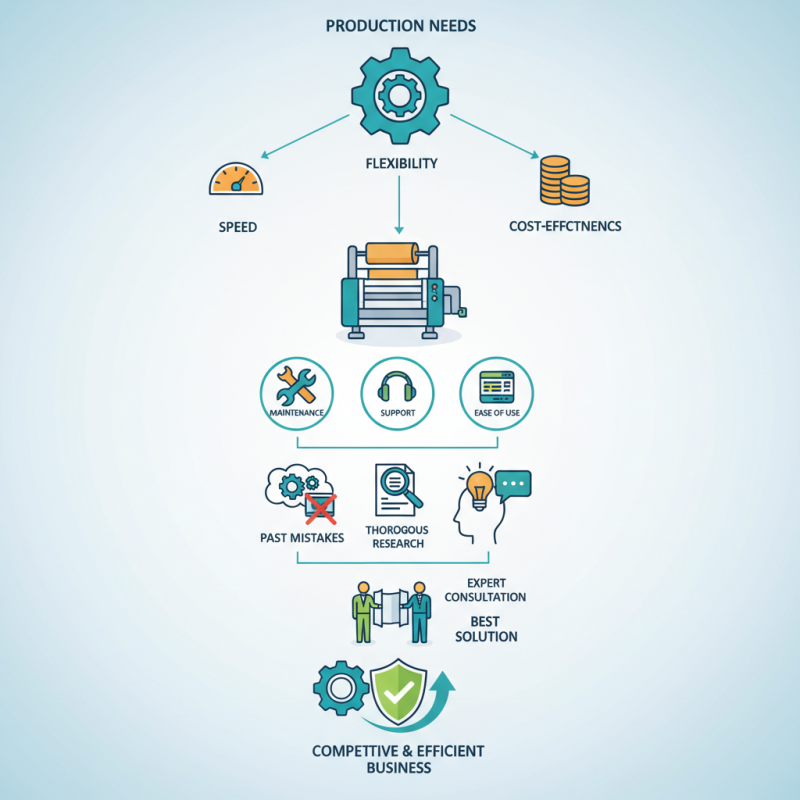
The roll stock machine market offers various options, each with unique features and benefits. Understanding your production needs is crucial in this process. Are you looking for speed, flexibility, or cost-effectiveness? This decision impacts your operational workflow and overall output.
Investing in a roll stock machine is not just about the price tag. Maintenance, support, and ease of use are equally important. Reflecting on past mistakes can guide your choice. It's essential to conduct thorough research and perhaps consult experts like Miller. Their experiences can steer you toward the best solution for your specific requirements. This way, you ensure that your business remains competitive and efficient.
Understanding Roll Stock Machines: An Overview of Types and Applications
Roll stock machines play a crucial role in packaging processes across various industries. Understanding the different types helps businesses make informed decisions. Common types include vertical form fill seal machines, horizontal form fill seal machines, and pouching machines. Each type serves specific applications, catering to different products and production needs. For instance, vertical form fill seal machines are ideal for granulates and powders. They excel in high-speed operations, which is vital for maintaining productivity.
Different applications necessitate varying features. A bakery may require a machine that seals dough products efficiently. In contrast, the pharmaceutical industry needs precision and hygiene. It is essential to consider these requirements when selecting a roll stock machine. However, not every machine is suitable for all situations. Some may struggle with certain materials, leading to production delays. Assessing the machine's capabilities and limitations is crucial for avoiding issues.
Investing in a roll stock machine can be daunting. Businesses must weigh their options carefully. They should analyze their specific needs, budget, and growth potential. Continuous improvement is vital in this area, as technology evolves rapidly. Regularly revisiting the choice of machinery ensures that the equipment aligns with current demands. Making informed decisions today could impact success in the future.
Key Features to Look for in Roll Stock Machines for Optimal Performance
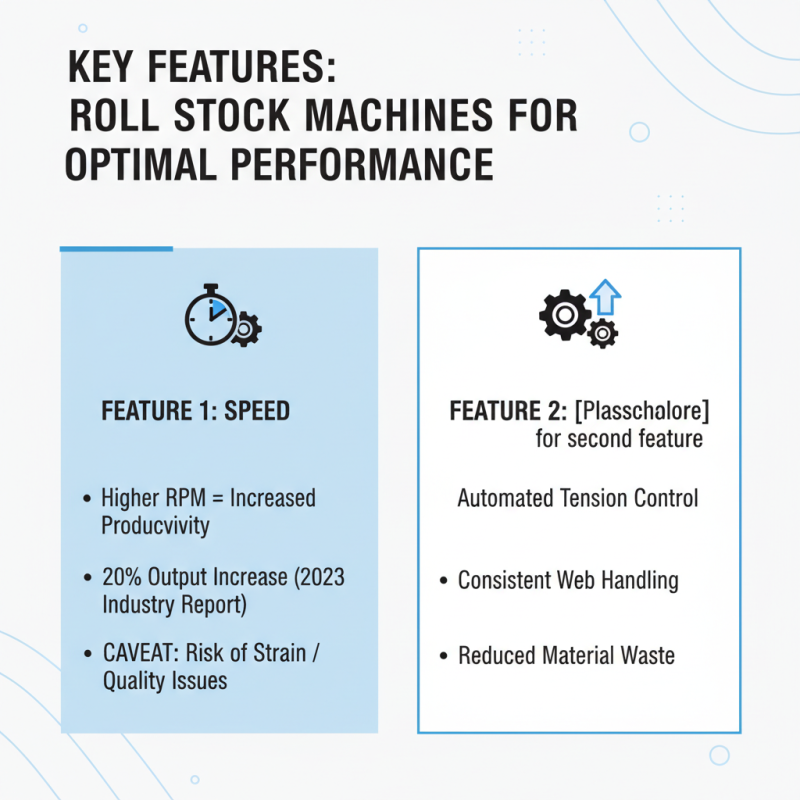
When selecting a roll stock machine, key features can greatly impact performance and efficiency. One critical factor is speed. A machine that operates at a higher speed can significantly increase productivity. According to a 2023 industry report, facilities optimizing machine speed saw a 20% rise in output. However, high speed may lead to mechanical strain or quality control issues.
Another important aspect is versatility. The ability to handle various materials is essential. Studies indicate that businesses using adaptable roll stock machines reduce waste by 15%. This versatility allows for quick adjustments to different packaging types without extensive downtime. However, machines that are too flexible may compromise precision and consistency, needing careful calibration.
User-friendliness is also vital. Machines should come equipped with intuitive controls and clear interfaces. A 2022 survey found that 30% of operators struggled with complex systems, leading to inefficiencies. Sometimes, simplicity goes a long way in enhancing operational flow. Investing in user-friendly technology can help alleviate these issues. Balancing these features with potential trade-offs is crucial for businesses looking to maximize performance.
Evaluating Production Capacity: How to Match Machines to Business Needs
When evaluating production capacity, understanding your business needs is crucial. The right roll stock machine can significantly boost efficiency and output. According to recent industry reports, companies can increase production rates by up to 30% with the proper equipment. This means aligning your machine's capabilities with your demand is essential for success.
Consider your average production volume. Are you producing daily or weekly? If your output varies, you may need a flexible machine that can adjust quickly. Look for specifications that indicate maximum and minimum production capabilities. A machine with a range can save costs in the long run.
**Tip:** Invest time in exploring machine features. Some machines offer advanced technology, enhancing tracking and reducing waste. This can lead to more sustainable practices.
Also, reflect on your operational workflow. Integrating new machines should not disrupt existing processes. Evaluate how new equipment will sync with your current setup. Communication with technicians can provide insights into potential challenges.
**Tip:** Always consult industry benchmarks. Understanding what competitors utilize can guide your decision-making and set realistic expectations.
How to Choose the Best Roll Stock Machine for Your Business?
| Feature |
Description |
Production Capacity (units/hour) |
Suitable Industry |
| Speed |
The speed at which the machine operates, affecting overall output. |
100 - 300 |
Food Packaging |
| Material Compatibility |
Types of materials that can be used with the machine (e.g., films, paper). |
N/A |
Medical, Food |
| Automation Level |
Level of automation available (manual, semi-automated, fully automated). |
N/A |
Manufacturing |
| Maintenance Requirements |
Frequency and complexity of required maintenance tasks. |
N/A |
Packaging |
| Cost |
Total investment needed, including installation and training. |
N/A |
Various |
Cost-Effectiveness: Analyzing Return on Investment for Roll Stock Machines
When analyzing the cost-effectiveness of roll stock machines, understanding return on investment (ROI) is crucial. A recent study by Smith & Associates indicated that companies investing in automated roll stock solutions can see an ROI of up to 35% within the first year. This impressive figure reveals the potential for significant savings on labor and material costs. However, ROI can vary greatly depending on the machine’s specifications and production environment.
Investing in a roll stock machine is not just about purchase price. Maintenance and operation costs also play a vital role. A report from the National Packaging Association showed that nearly 25% of total machine costs are related to maintenance. Therefore, businesses must consider the reliability of the equipment and the availability of parts. Unexpected downtimes can lead to production losses that undermine ROI.
Furthermore, the choice of materials affects overall cost-effectiveness. According to a survey by Packaging Insights, nearly 60% of manufacturers reported that the choice of roll stock material directly influenced their profitability. While cheaper materials may seem appealing, they might compromise product quality. Balancing cost with quality is essential for optimizing ROI. Understanding these nuances can lead to better decision-making in selecting the right roll stock machine for your needs.
Industry Trends and Innovations Influencing Roll Stock Machine Selection
When selecting a roll stock machine, staying updated with industry trends is crucial. Recent reports indicate that the demand for flexible packaging continues to rise. In 2023, the global flexible packaging market was valued at approximately $250 billion, growing at a compound annual growth rate (CAGR) of 4.5%. This growth signals the need for businesses to invest in advanced roll stock machines that align with market demands.
One major trend is sustainability. Packaging solutions are shifting towards eco-friendly materials. Many companies are adopting biodegradable options or recyclable materials. For example, research from the Association for Packaging and Processing Technologies shows that 30% of consumers prefer sustainable packaging. This growing demand influences businesses to seek machines that can efficiently handle sustainable materials. However, the adaptation might present challenges, as not all existing machines can process these new substrates effectively.
Moreover, integrating technology plays a vital role in machine selection. Automation and Industry 4.0 capabilities are becoming essential for efficiency. Analysts predict that automated roll stock machines could reduce production time by up to 25%. Yet, many businesses may struggle with the initial investment and the transition process. Understanding these trends and their implications is key for informed decision-making.