Top Overwrapping Machines for Global Buyers?
Choosing among the top overwrapping machines for global buyers requires more than comparing prices and advertised speeds. A reliable machine must match the product, packaging film, production volume, and local operating conditions. A carton may look simple, yet its edges, dimensions, and surface finish can affect sealing quality.
This guide examines overwrapping machines through practical purchasing criteria. These include wrapping speed, film compatibility, seal temperature control, changeover time, automation, energy use, and maintenance access. We also consider documentation, operator training, spare-part availability, and technical support across regions. These details often determine whether a machine performs well after installation.
Published speed can mislead.
Manufacturers may measure output under ideal conditions. Real production can involve uneven cartons, film tension changes, or frequent size adjustments. Buyers should request factory trials using their own products and materials. Test results, sample packages, and service records provide stronger evidence than promotional claims.
Experience matters here. A machine that runs smoothly in one facility may need different settings elsewhere. Climate, workforce skills, voltage standards, and logistics can influence daily performance. No single model suits every buyer. That point deserves attention.
The right decision balances efficiency with reliability, safety, compliance, and long-term support. By comparing verified specifications and asking practical questions, global purchasers can reduce costly surprises and select equipment with greater confidence.
What Are Overwrapping Machines and How Do They Work?
What Are Overwrapping Machines and How Do They Work?
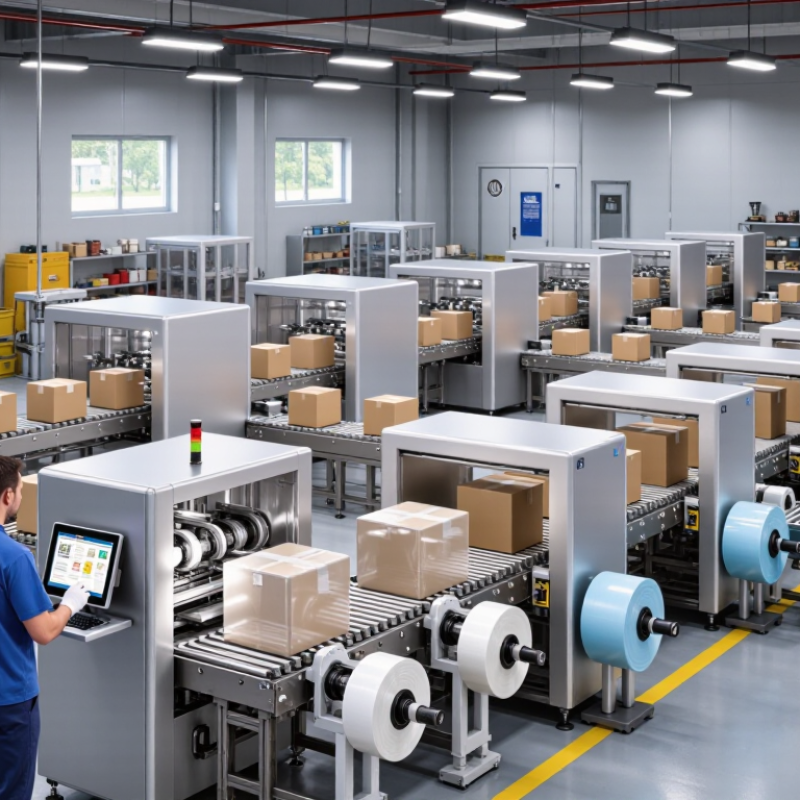
Overwrapping machines seal products in a tight outer film, often creating a neat, tamper-evident package. They are common in food, cosmetics, household goods, and gift packaging. A typical machine feeds a product into clear or printed film. The film wraps around the item, then heated plates or hot air seal the edges. Folding guides create sharp corners and a consistent finish.
The process begins with product infeed and film unwinding. Sensors check spacing before the product enters the wrapping section. A cutting unit separates each film piece, while folding mechanisms pull the film around the product. Heat seals the longitudinal and end flaps. Cooling helps the seal set. Small adjustments matter. Film tension, temperature, and conveyor speed must work together.
For global buyers, machine selection should match product size, film type, output targets, and local power requirements. Stainless steel contact areas can simplify cleaning in demanding production rooms. Safety guards, accessible controls, and spare-part support also affect long-term reliability. From practical testing, one setting rarely suits every product. Operators may need several trials, especially when films change with humidity or thickness. That is where specifications can mislead. A faster machine is not always better if seals wrinkle or cartons shift. Requesting sample runs and measured seal tests can reveal these weaknesses before installation.
Top Overwrapping Machines for Global Buyers? – What Are Overwrapping Machines and How Do They Work?
| Machine Category | How It Works | Typical Output Range | Suitable Product Formats | Common Film Materials | Typical Product Size Range | Sealing Method | Automation Level | Best Use Case | Key Buying Considerations |
|---|---|---|---|---|---|---|---|---|---|
| Manual Overwrapping Machine | The operator places the product into the film-folding area. The machine folds and seals the film around the product with manual loading and positioning. | Approximately 5–20 packs per minute | Small batches, gift packs, specialty foods, soaps, candles, and sample products | Cellophane BOPP Paper-based laminate | Usually small to medium products; commonly up to approximately 250 mm in length | Heat sealing or tuck-and-fold closure | Low; operator-assisted | Low-volume production and frequent product changes | Low initial cost, compact footprint, operator skill, and consistency of manual loading |
| Semi-Automatic Overwrapping Machine | The operator loads products into a forming or feeding station, while the machine performs film folding, sealing, and pack discharge automatically. | Approximately 20–60 packs per minute | Confectionery, personal-care products, promotional packs, and small cartons | BOPP Cellophane Coated paper | Small to medium products; often up to approximately 300 mm in length | Heated sealing jaws, hot-air sealing, or tuck-and-fold closure | Medium; assisted loading with automated wrapping | Growing businesses requiring better speed and repeatability | Loading ergonomics, film adjustment, changeover time, and access to maintenance parts |
| Horizontal Flow-Overwrapper | Products move horizontally through a continuous film web. The film is folded around the product, longitudinally sealed, and then end-sealed and cut. | Approximately 40–150 packs per minute | Bars, biscuits, bakery items, soap, hardware, stationery, and retail cartons | BOPP Polypropylene Laminated films | Commonly 50–400 mm long, depending on the machine configuration | Longitudinal fin seal with transverse end seals | Medium to high; continuous feeding options available | High-volume products with regular shapes and consistent spacing | Product infeed accuracy, sealing temperature control, film tracking, and speed synchronization |
| Automatic Folding Overwrapper | A pre-cut or continuous film sheet is positioned around the product. Folding plates or forming tools create neat corner folds, followed by heat sealing or mechanical closure. | Approximately 30–100 packs per minute | Rigid cartons, premium gift boxes, soap cartons, tea boxes, and presentation packs | Cellophane BOPP Paper film | Small and medium rigid packs; often up to approximately 350 mm in length | Heat sealing, adhesive sealing, or tuck-and-fold closure | High; automatic film feeding and folding | Retail packaging where appearance and precise folds are important | Fold quality, film tension, corner appearance, tooling flexibility, and pack presentation |
| Carton Overwrapping Machine | Cartons are automatically fed into a film-wrapping section, where the film is folded tightly around each carton and sealed to create a protective outer layer. | Approximately 40–120 cartons per minute | Pharmaceutical cartons, cosmetics, tobacco alternatives, food cartons, and household products | BOPP Cellophane Barrier laminates | Typically rectangular cartons from small packs to approximately 400 mm long | Heat sealing or adhesive sealing | High; often integrated with carton feeders and conveyors | Tamper-evident presentation, dust protection, and retail-ready cartons | Carton dimensional stability, tamper-evident features, line integration, and inspection systems |
| Bundle Overwrapping Machine | Several products are collated into a group before a larger film web is folded and sealed around the complete bundle. | Approximately 15–60 bundles per minute | Multipacks, promotional combinations, beverage accessories, stationery sets, and household bundles | Polyolefin film BOPP Shrink-compatible film | Medium to large bundles; size depends on product count and collation pattern | Heat sealing, fin sealing, or shrink-assisted closure | Medium to high; automatic collation is available | Promotional packs and products sold in grouped quantities | Collation accuracy, bundle stability, film strength, sealing area, and changeover flexibility |
| Servo-Controlled High-Speed Overwrapper | Servo motors coordinate product feeding, film movement, folding, sealing, and cutting to maintain accurate timing at high production speeds. | Approximately 100–300 packs per minute | Standardized confectionery, snack products, cartons, and high-volume consumer goods | BOPP Polypropylene Laminated films | Usually small to medium products with stable dimensions and consistent spacing | Continuous heat sealing with electronically controlled jaws | Very high; suitable for automated production lines | Large-scale manufacturing with demanding throughput targets | Line speed, servo synchronization, reject handling, remote diagnostics, and total cost of ownership |
| Modified-Atmosphere Overwrapper | The product is wrapped inside a controlled gas environment before sealing, reducing exposure to oxygen and helping preserve product quality where compatible with the product. | Approximately 20–100 packs per minute | Fresh foods, bakery products, prepared meals, and selected perishable goods | High-barrier laminate Gas-barrier polypropylene Sealable barrier film | Small to medium trays, cartons, or rigid packs | Hermetic heat sealing with gas-flushing equipment | High; requires controlled gas and sealing systems | Products requiring extended shelf-life support through controlled packaging conditions | Gas composition, residual oxygen, seal integrity, food regulations, and film barrier performance |
Overwrapping machines generally form a protective film envelope around an individual product or bundle. The main process steps are product feeding, film positioning, folding or forming, sealing, cutting, and discharge. Buyers should validate the selected machine with production samples before purchase.
Related Posts
-
Top 10 Packaging Equipment and Machinery for Global Buyers?
-
Top 10 Form Fill and Seal Machines for Global Buyers?
-
Top Types of Tray Machines for Efficient Production Processes?
-
Top 10 Cartoning Machines for Efficient Packaging Solutions
-

Top 10 Packaging and Machinery Innovations You Should Know?
-
How to Choose the Right Packaging Sealer Machine for Your Needs?

Products
Links
© Copyright 2025 | All Rights Reserved