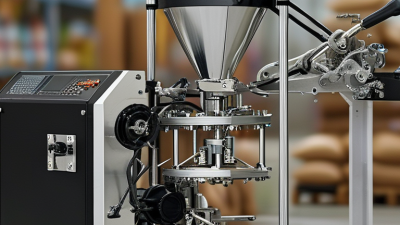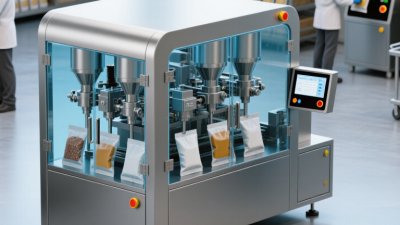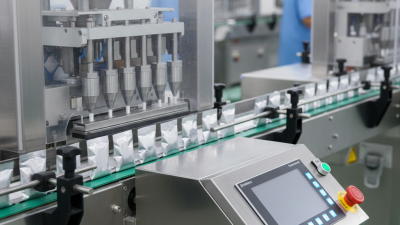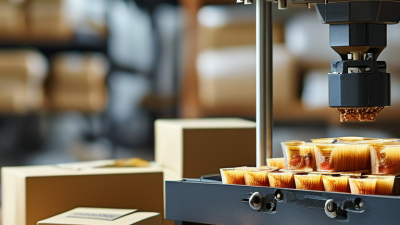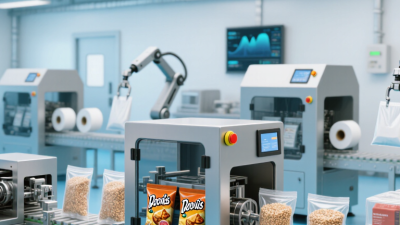
Choosing a sachet filling machine in 2026 is not just a matter of comparing speeds. The right choice depends on your product, pack size, sealing needs, and daily production target. A powder that flows freely behaves differently from a sticky paste. Film width, fill accuracy, changeover time, and cleaning access all matter on the factory floor.
One point about attribution: without a verifiable source, a quotation should not be presented as a real expert’s words. The following is an illustrative line from a fictional packaging specialist, Mira Chen: “A machine earns its place when it handles your hardest product reliably, not just your easiest test.” It is a useful idea, but buyers should still confirm performance with product trials and written specifications.
This guide explores machine types, dosing systems, materials, output rates, and supplier questions. Look closely at the parts operators touch: the hopper, film path, sealing jaws, and controls. Ask how quickly the machine changes between sachet sizes. Request sample packs made with your own product. They can reveal weak seals or uneven fills before installation.
A brochure is not a production trial. And a fast machine may create extra waste if its settings are difficult to control. We will also examine maintenance access, spare parts, training, and realistic growth plans. Some choices remain imperfect; budget, space, and flexibility rarely align neatly. The goal is a sachet filling machine suited to your actual process, not merely the most impressive specification sheet.
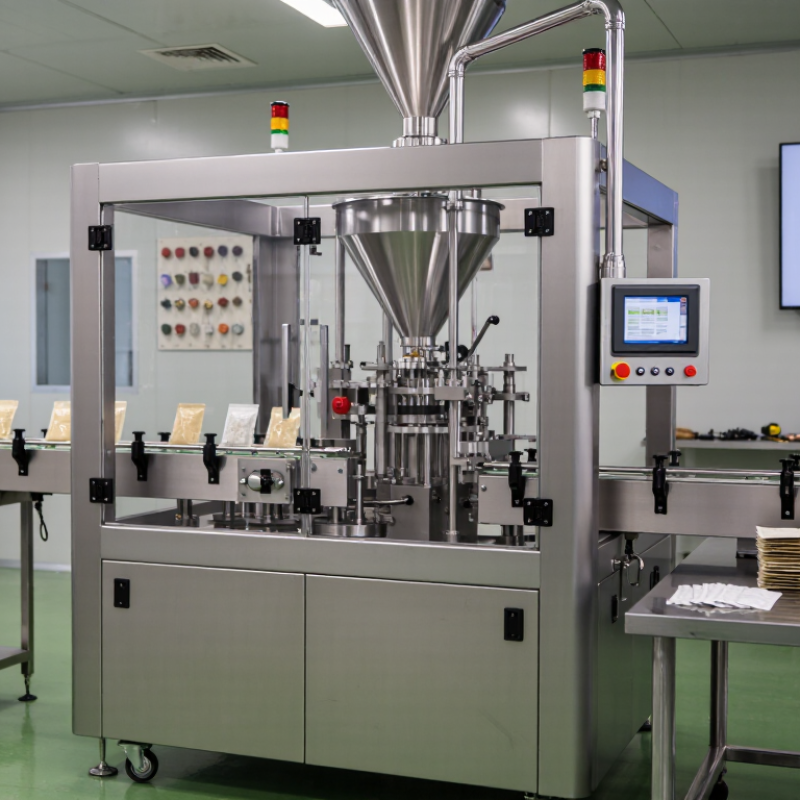
Before comparing machines, define the product precisely. Is it a free-flowing powder, sticky paste, liquid, or a blend with visible particles? Each behaves differently at the dosing point. Note its density, temperature, and sensitivity to moisture or air. Small details matter. A powder that bridges in a hopper may cause inconsistent fills, even when the machine’s stated speed looks suitable.
Set the sachet format next: target weight, width, length, seal style, and material structure. Ask suppliers to test your actual product and film, not a convenient substitute. PMMI’s 2024 State of the Industry report estimated U.S. packaging machinery shipments at $10.2 billion in 2023, up 5.8% from 2022. That scale reflects a busy equipment market, but it does not mean every line suits your application. Do not guess.
Finally, define real production needs: acceptable fill-weight variation, expected shifts, changeover frequency, and available operators. Separate peak speed from sustained output; frequent cleaning or film changes can reduce the latter. A first estimate is often wrong. Recheck it against a normal production day, including setup and stoppages. Share those assumptions with the machine supplier, then compare test results, changeover time, and cleaning access alongside the quoted sachets per minute.
How to Choose a Sachet Filling Machine in 2026?
Sachet machines differ mainly in how they form packs, move film, and dispense product. Intermittent vertical form-fill-seal machines pull a film web, seal the sides, dose product, and cut each sachet while the web pauses. This controlled cycle suits powders and granules, but can limit output. That pause matters. Continuous-motion machines keep the film moving during sealing, helping increase speed when product flow and seal timing stay consistent.
Multi-lane machines form several sachets across one film web. They can raise output without multiplying full machine lines, though cleaning and changeovers may take longer. Premade-pouch systems instead open, fill, and seal prepared sachets. They avoid forming packs on the line, but depend on consistent pouch dimensions and opening behavior. Not always faster.
PMMI’s 2024 State of the Industry report put U.S. packaging machinery shipments at $10.9 billion in 2023. That broad figure signals investment in packaging equipment, not proof that one sachet format is best. Compare filling accuracy, changeover time, film waste, and seal quality using your actual product. A neat factory test can mislead; fine powder may cling to a dosing tube, while a granular blend may flow unevenly. Ask suppliers to test representative samples, then inspect sachets after the line has run long enough to warm up.
Choose a sachet filling machine by testing it with your product, film, and target pack size. A stated filling tolerance is only a starting point. Weigh samples throughout a sustained run, using a calibrated scale, and compare results from the beginning, middle, and end. For powders, watch for bridging or dust that may affect dosing. For liquids, check for drips around the filling nozzle. Small differences matter.
Inspect seal width and edges, then test cooled sachets for leaks after gentle handling. Check the intended packaging film at realistic production speed, since film thickness can affect heat and sealing time. Check the seal. For capacity, focus on saleable packs per hour, not just the fastest advertised cycle. Include film changes, cleaning, refills, and routine adjustments in your estimate. A slower run with fewer rejected packs may be the more useful measure.
Tips: Request a trial using your actual product and packaging. Keep a record of machine settings and rejected packs, not only successful samples. If results vary, pause before blaming the machine; product flow, film tension, or setup may need adjustment. A trial helps, but it may not represent every shift or batch.
A sachet filling machine should match the product, pack size, and real production pace—not just a brochure’s maximum speed. Record the required dose range and film type, then test samples on the machine. Watch for powder dust near the sealing jaws, uneven fills, and sachets that fail a simple seal check. Small details matter.
Automation can reduce repetitive handling, but sensors and alarms need practical testing. Check whether operators can clear a film jam without reaching near moving parts. Guards, emergency stops, and clear lockout procedures support safer work. Keep controls simple. Hygiene deserves equal attention: inspect product-contact surfaces, drain points, and corners where residue may collect. Ask how parts are removed and cleaned during a normal shift. A polished exterior proves little.
Regulatory requirements depend on the product and market, so confirm them with qualified compliance staff before purchase. Request material declarations for product-contact components, cleaning instructions, machine documentation, and records of applicable safety assessments. Verify that the installed configuration matches the paperwork. It is easy to overlook that last part. Consider how cleaning, changeovers, and routine checks will be recorded after commissioning. A machine may meet a specification yet still frustrate operators on a busy Monday. Test the workflow with the people who will run it.
| Selection area | What to assess | Questions and evidence to request | Practical selection guidance |
|---|---|---|---|
| Product and sachet format | Product properties, target fill range, sachet dimensions, seal style, film structure, and number of lanes. | Can the supplier run trials using the actual product and packaging material? Are sample sachets available for seal and fill checks? | Confirm the intended format and product behavior before comparing machine speeds. Powders, liquids, pastes, and granules may require different dosing and product-contact arrangements. |
| Automation and controls | Recipe management, operator interface, alarms, changeover controls, data access, and integration with upstream or downstream equipment. | Which settings are recipe-controlled? Can authorized users manage access? What production, alarm, and changeover data can be exported? | Match automation to staffing, product variety, and traceability needs. Verify that interfaces and data records support the site’s systems and procedures. |
| Throughput and fill accuracy | Demonstrated output under defined conditions, dose consistency, reject handling, and performance with the intended product and film. | Are quoted rates based on a test with the specified format and product? How are fill-weight checks, rejects, and stoppages recorded? | Evaluate a documented acceptance test rather than relying on a headline speed. Agree in advance on test materials, operating conditions, and acceptance criteria. |
| Hygienic design and cleaning | Product-contact materials, accessible surfaces, crevices, drainage where relevant, dust control, and cleaning or changeover procedures. | Which parts contact the product? Are material specifications available? Can parts be inspected and cleaned without difficult access or unnecessary disassembly? | Assess the machine against the product’s contamination risks and the facility’s sanitation program. Hygienic-design guidance and certification schemes may be voluntary or sector-specific; verify applicability. |
| Operator safety | Moving parts, hot sealing components, electrical hazards, guarding, interlocks, emergency stops, and safe access for maintenance. | Is a documented risk assessment available? Can safety functions and protective devices be reviewed and tested during acceptance? | Consider recognized machinery-safety references such as ISO 12100 for risk assessment, ISO 13849-1 for safety-related control systems, and IEC 60204-1 for electrical equipment of machines, as applicable in the target market. |
| Regulatory and market requirements | Destination-market machinery rules, product-contact requirements, labeling needs, and industry-specific obligations. | What conformity documents, material declarations, technical files, or user instructions are supplied? Which requirements apply to the machine and which to the packaged product? | Requirements depend on location, product, and intended use. For example, EU food-contact materials are addressed by Regulation (EC) No 1935/2004; U.S. food-contact substances are subject to applicable FDA requirements. Confirm obligations with qualified regulatory personnel. |
| Validation and documentation | Installation and operating documentation, calibration information, test records, maintenance instructions, and change control. | Can the supplier support commissioning and qualification activities? Are drawings, manuals, recommended spare parts, and software or settings backups provided? | Define documentation deliverables before purchase. Where required by the site or sector, align testing and qualification with the organization’s quality system. |
| Maintenance and lifecycle support | Service access, wear parts, spare-parts availability, training, troubleshooting, and support response arrangements. | Which components are routine wear items? Are maintenance tasks and intervals documented? What training and technical support are available? | Compare total lifecycle needs, not purchase price alone. Check that maintenance can be performed safely and that critical parts and skills are available to the facility. |
Note: Regulatory obligations vary by product, facility, and destination market. Verify current requirements with the relevant authorities and qualified specialists before purchase or installation.
A sachet filling machine’s purchase price is only one line in its cost. Add tooling, change parts, installation, operator training, utilities, film waste, and planned maintenance. Ask suppliers to estimate cost per acceptable sachet at your target speed, not just maximum output. Small details matter. Confirm which product-contact parts, seals, and format components are included, and which require separate orders.
Supplier support becomes measurable when response times, spare-parts availability, and service arrangements are written into the offer. Ask who handles commissioning and what training operators receive for cleaning, setup, and fault recovery. Request a parts list with realistic delivery estimates. A polished brochure is not support. Check references from facilities running similar sachet sizes and materials, while remembering their conditions may differ from yours.
Before purchase, test your actual product and packaging film on the proposed machine. Record fill-weight variation, seal integrity, changeover time, rejected packs, and performance during a sustained run. Bring difficult samples, such as dusty powders or products that bridge, if they reflect your process. Review the raw measurements together, not only a demonstration video. One successful run can be misleading; test conditions may be unusually forgiving. Not enough.

© Copyright 2025 | All Rights Reserved